2023 Plans and Content

This year was a slow start for Global Politics. Outside of updates, only 1 book review was published. While I enjoyed writing the book review, writing once every couple months does not make for a good website. So, for 2023, Global Politics will launch 3 editor’s columns and start its journey accepting outside submissions. See more details below.

Editors Columns

As Editor in Chief and Creator of Global Politics, it’s important that I remain a consistent contributor. Therefore, 2023 will see the launch of 3 Editor’s Columns: The Korea Kolumn, Editor’s Take, and Book of the Month.

Korea Kolumn

Korea Kolumn will be a monthly column focused on Korean—North and South—politics, culture, and society. Foreign policy related to Korea is also a possible topic. Each column will be either an analytic or strategic essay focused on a topic of importance to understanding Korea and the politics surrounding the peninsula.

Editor’s Take

Ever wondered what the Editor in Chief of your favorite publication thinks about anything? That is the idea behind the Editor’s Take column. Each month, I will work to provide some thoughts on a topic of interest—IR theory, global events, trending headlines. The Editor’s take will usually take the form of an analytic essay and, in most cases, is meant to spur discussion. Although these columns may be in places I am by no means an expert in, they will be grounded in research and I welcome comments and corrections to my ideas and facts.

Book of the Month

Understanding the thoughts of others can help put our own ideas into context, shaping even our own thoughts about current events. Reading is an essential way to learn the thoughts of others. Therefore, the final column I will launch in 2023 is the Book of the Month. This column will not rank books. Rather, it will be a monthly review of a book discussing a topic related to international affairs, history, or politics. In other words, I’ll pick a book each month to read and review. If there’s a desire for me to read a certain book, I may be inclined to rake recommendations for books to review.

Call For Papers

On January 1, 20230 Global Politics will open for submissions. Anyone focused on foreign policy or with a well researched idea is welcome to submit. It is advised that potential contributors take a look at the submission guidelines before submitting. Global Politics is excited to receive all submissions and publish those who care about international affairs.

In mid-2023, Global Politics will open a contributor program for those with an interest in publishing more frequently with us. This program requires participants to publish 1 piece a month for a 3, 6, or 12 month period to build their portfolio of international affairs research and commentary. Program details will be published at a later date.

Although an official call for papers will be posted in early 2023, Global Politics welcomes submissions starting now!

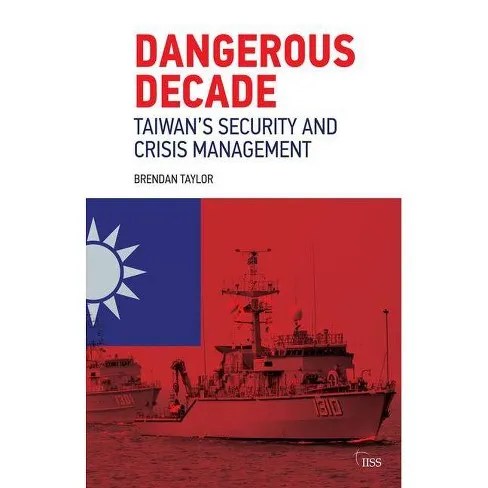
Security and Crisis Management Across the Taiwan Straits: A Book Review

Brendon Taylor, Dangerous Decade: Taiwan’s Security and Crisis Management, (London: International Institute for Strategic Studies, 2019).

In August, Nancy Pelosi led a delegation from congress on a visit to Taiwan in a show of American support. China, in an expression of opposition, held military drills that appeared to simulate an invasion of the island among other military actions. Such actions showcase the political importance of Taiwan as a vibrant democratic nation in East Asia but also highlight the dangers associated with crafting policy for Taiwan; a simple miscalculation can spark a great power conflict between China and the United States with the potential to reshape the world system. Therefore, the United States and China require carefully crafted policies that can avoid sparking a crisis.

Brendon Taylor, in Dangerous Decade, argues that a narrow set of crisis management tools, in particular confidence building measures, are required to ensure that a larger conflict does not spawn from another Taiwan Straits crisis (p. 13). While confidence building measures are a viable policy option, a consistently shifting status-quo makes them difficult to craft and enforce. While Taylor adeptly analyzes the policy options for avoiding conflict across the Taiwan Straits, his book falls short in addressing the critical historical and political shifts that would impact such political decisions.

Taylor starts his argument by analyzing the delicate state of the status-quo. In short, Taylor analyzes the status-quo as the set of agreements that Beijing would not seek military action, Taipei would not pursue independence, and Washington seeks to deter the two (15). This situation creates a delicate balance of power that is held in place by the overarching threat of great power conflict. A critical aspect of the delicate balance of power is the potential for military conflict. For example, Chinese development of nuclear submarines and counter-space capabilities raise the incentives for American and Taiwanese development of military technology (84-86). Increasing incentives for military development can spark an arms race, increasing the potential for accidental escalations across the Taiwan Straits.

A simple miscalculation can spark a great power conflict between China and the United States with the potential to reshape the world system.

While Taylor’s analysis hits the high points of this delicate balance, there are a few key weaknesses in Taylor’s analysis. First, there is not quite enough analysis about the previous Taiwan Straits crisis and how those are currently impacting Chinese and American policy making. A deeper analysis may reveal some weaknesses in using confidence building measures since both sides seem firm on ambiguity as a piece of deterrence. Also, Taylor does not include a detailed analytical framework for including Xi’s desire to unify Taiwan and the mainland under his rule. One must, however, give credit to Taylor as Xi’s stance on Taiwan has hardened since the publication of Dangerous Decade. These weaknesses, however, are a part of the design of the book as Taylor seeks to provide workable policy options based on current political trends and not a blow by blow historical account of Taiwan-China-United States relations.

The strongest chapter of the book is the closing chapter in which Taylor examines the variety of policy options and provides his ideas for a path forward built on confidence building measures to deescalate the potential for conflict. First is an adept analysis of three diplomatic options–the grand bargain, one country-two systems, and a potential peace agreement. While “conflict resolution can sometimes spring from the most unlikely of circumstances,” (92), Taylor’s analysis clearly points out the troubling weaknesses of diplomacy, including political trouble with deals to potential nuclear development following abandonment by Washington (92-103). Then, Taylor’s analysis shifts toward extended deterrence and catastrophic conflict policy options, both of which he rightly dismisses as dangerous with the potential to disrupt trade and cause serious damage to China, Taiwan, the United States, and the international system overall.

Then, Taylor lays out a path forward built on confidence building measures to deescalate conflict across the straits. Confidence building measures mixed with broader crisis management protocols for civil-military and military interaction will “be crucial in managing a future Sino-American crisis over Taiwan” (121). While adeptly argued Taylor’s path forward has multiple weaknesses. First, the use of such measures will be hard to enforce, as Taylor mentions. Second, the nature of the conflict may lead to the use of confidence building measures that briefly deescalate tensions in the short-term but overall do nothing to alter the overarching potential for conflict. Throughout his examination of confidence building measures in Taiwan, Taylor engages with the difficulties of such a policy and, in the process, provides a nuanced view of a policy option that may simply be best option at the moment.

Brendon Taylor offers a very cogently argued need for the use of confidence building measures in dissolving tensions across the Taiwan Strait. His work not only offers guidance for policy makers, it provides enough historical context and information for policy makers to come into the decision informed.

Brendon Taylor, in a very easy to read book, offers a very cogently argued need for the use of confidence building measures in dissolving tensions across the Taiwan Strait. His work not only offers guidance for policy makers, it provides enough historical context and information for policy makers to come into the decision informed. Despite the main weaknesses of Taylor’s book, one cannot help but say he achieved his goal in writing this book. Dangerous Decade is a welcome addition to the political and academic discussion surrounding Taiwan and offers a path forward built on deescalation that could produce results. Overall, the book is worth reading to understand the current state of Taiwan and I cannot help but wonder how Taylor views his argument in light of the 20th Party Congress in Beijing.
The Journey Continues

The First Global Politics Logo!

Welcome to the journey of Global Politics! While I am still hard at work working on the first formal posts–I am going to work on 2 book reviews and some short analytical pieces for the first content–I wanted to share a few small victories for Global Politics.

First, Global Politics is now on Twitter and Facebook! Please follow us on Twitter at @globalpoltcs and search us on Facebook for @globalpoltcs. These social forums will feature all of our work and work to spread the word about Global Politics to a wider audience. Sharing on social media will occur for many of the published articles, so please be aware as you are submitting that we will try to feature your work in a social media post on Facebook and Twitter.

Second, Global Politics now has a logo (see above). While this is the official logo, please be aware that this logo is a first one and as the site grows, the logo will continue to evolve. I am always looking to get good feedback on this site about our operations, content, and looks. If you have constructive feedback, do not be afraid to get in contact with us at globalpoliticseditor@gmail.com.

Finally, a draft of the submission guidelines has been posted! Right now it mainly outlines the very basic outlines and a more detailed guidelines page is in the works. Since the Submission Guidelines is published, the blog will start to receive the first submission shortly.

I appreciate everyone and look forward to continuing to grow this website and blog to have a strong readership and highlight the young professionals of the world.

Welcome to Global Politics

Welcome to Global Politics!

International affairs is an amazing field of study but little to no outlets exist for young scholars, graduate students, mid-career professionals, and independent analysts (such as myself). Global politics seeks to contribute to the field of international affairs scholarship by featuring young voices and independent analysts. Analytical and scholarly contributions will be provided by mainly up and coming international affairs professionals, showcasing new perspectives on challenging issues and core theories.

While the mission is to provide a platform for young scholars, Global Politics contributors must demonstrate a working expertise of their topic. This can be done through schooling—Masters or PhD degree—or professional experience such as living abroad or direct work experience. This site will remain open to those who do not have these exact experiences, but those who are unable to demonstrate their expertise through their writing and/or experience may have their paper rejected. It’s our goal to ensure that all contributions to this site are high quality so contributors can feel proud to have their work published on this site.

To achieve its mission, this site will publish a wide variety of scholarly and analytical pieces. Global Politics is particularly interested in short analytical articles on current affairs, deep-dives into global challenges, scholarly articles with a focus on applying and advancing international relations and political science theories, full literature reviews, capsule reviews of new scholarly articles, and original book reviews. A Submission Guidelines page is coming soon!

Now, it’s safe to say that readers and future analytical contributors will need to know what Global Politics is interested in publishing. This site is interested in the study of international affairs broadly defined. Yes, this site will publish on American politics, systemic analysis, foreign policy, and also regional issues. If you have a particular topic in mind and want to see if it’s within our scope, please do not hesitate to reach out. Global Politics seeks to work with all authors to not only publish their work but provide impactful review of their article from pitch to publication to enhance the authors writing.

Given the wide nature of this project, it’s imperative that Global Politics grows into its mission. Starting now, Global Politics will publish short analytical pieces and book reviews on this site. As readership and submissions grow, the editorial leadership of Global Politics will seek people to contribute deep-dives based on their expertise. Finally, Global Politics will then launch the Journal of Global Politics that will publish the more scholarly works.

I look forward to starting this journey and working to bring the young voices to the table. This is a mission close to my heart as an independent analyst and I cannot wait to see the growth of Global Politics.

Sincerely,

Benjamin Zimmer: Creator of Global Politics